
Understanding a Passenger’s Right to Recover on the North Shore
Key Takeaways: Passengers injured in a Mandeville car crash can file an injury claim under Louisiana law, and their right to recover is rarely reduced because they seldom share fault. These claims are classified as "delictual actions" under the Louisiana Civil Code, allowing recovery for medical bills, lost wages, and pain tied to another party’s negligence. Louisiana’s comparative fault system lets injured parties recover when partially at fault (subject to applicable rules based on the accident date), and fault can be assigned to multiple drivers. Proving negligence requires showing duty, breach, causation, and damages. Louisiana imposes strict filing deadlines that depend on the accident date, making prompt action essential. Injured passengers benefit from consulting an experienced Louisiana personal injury attorney.
Yes, passengers injured in a Mandeville car crash can generally file an injury claim under Louisiana law. Passengers occupy a favorable legal position because they rarely share fault for a collision, which means their right to recover is seldom reduced. Whether the crash happened on Highway 190, Causeway Boulevard, or a residential street, an injured passenger may pursue compensation against any negligent driver.
If you were hurt as a passenger, the team at Smiley Law Firm is ready to help. Call us at (504) 822-2222 or schedule a free consultation to discuss your situation with a Louisiana personal injury attorney.
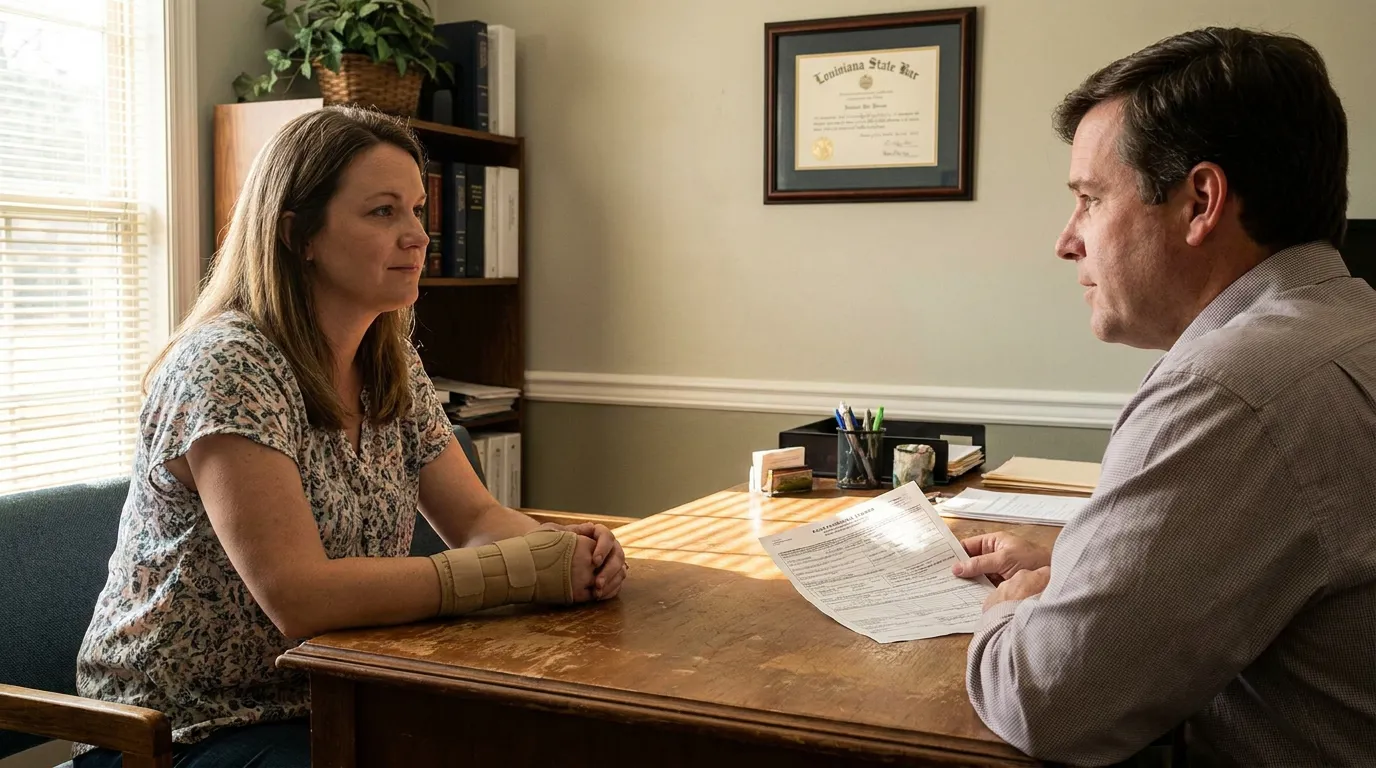
Why Passenger Claims Are Treated as Delictual Actions
A car crash injury claim in Louisiana is legally classified as a "delictual action." Because Louisiana is a civil law state, personal injury claims flow from the Louisiana Civil Code rather than from judge-made tort doctrine alone. This distinction shapes how deadlines, fault, and damages are analyzed.
Louisiana lawmakers have repeatedly confirmed this category. A recent proposed legislative instrument, Senate Bill No. 334, was titled to provide "relative to certain prescriptive periods for delictual actions," reinforcing that car accident injuries fall within this framework. You can review the full text through the Louisiana Legislature’s official record for the 2024 Regular Session.
For a passenger, this classification is good news. A delictual action lets an injured rider seek recovery for medical bills, lost wages, pain, and other losses tied to another party’s negligence. When multiple drivers contribute to a crash, a passenger may pursue more than one at-fault motorist.
💡 Pro Tip: Keep every document connected to your crash, including the police report number, photos, and the names and insurers of all drivers involved.
How Louisiana’s Comparative Fault System Protects Injured Passengers
Louisiana’s comparative fault rules under La. Civ. Code art. 2323 protect injured passengers, though the applicable framework depends on when the accident occurred. For incidents occurring before January 1, 2026, Louisiana followed a pure comparative fault system under La. Civ. Code art. 2323(A), allowing an injured party to recover even when partially at fault, with recovery reduced proportionally by the claimant’s share of fault. However, effective January 1, 2026, Louisiana amended art. 2323 (Acts 2025, No. 15) to adopt a modified comparative fault system with a 51% bar rule: a claimant found 51% or more at fault is barred from any recovery, while a claimant found less than 51% at fault may still recover, with damages reduced proportionally by their share of fault. Because passengers rarely control vehicle operation, this rule usually works strongly in their favor under either framework.
This framework was the product of deliberate legislative choice. Louisiana abolished the older contributory negligence rule, under which any fault by the plaintiff could completely bar recovery, first adopting a pure comparative fault system in 1979. However, effective January 1, 2026, Louisiana transitioned to a modified comparative fault system under amended Civil Code Article 2323, which bars recovery entirely if the plaintiff is found 51% or more at fault. Legislators studied several models before Louisiana settled on its current approach, documented in scholarship from the LSU Law Review archives.
Fault can also be assigned to parties not even named in a lawsuit. Under La. Civ. Code art. 2323(A), fault is determined "regardless of whether the person is a party to the action or a nonparty, and regardless of the person’s insolvency, ability to pay, immunity by statute… or that the other person’s identity is not known or reasonably ascertainable." For a Louisiana car crash passenger injured by multiple drivers, this means the system is built to sort out shared responsibility fairly.
Proving Negligence in a Mandeville Motor Vehicle Accident
Every passenger injury claim rests on proving negligence. In practical terms, that generally means showing four things: that a driver owed a duty of care, breached that duty, caused the crash, and produced real damages. Passengers benefit because the central dispute is usually between drivers, not the rider.
Common evidence used to establish these elements includes:
- Police crash reports and any citations issued at the scene
- Photographs of vehicle damage, skid marks, and roadway conditions
- Medical records tying injuries directly to the collision
- Witness statements and, where available, dashcam or surveillance footage
Negligence law also permits defenses that focus on the plaintiff’s own conduct. For passengers, these defenses rarely gain traction, but documenting your own reasonable behavior, such as wearing a seatbelt, still helps.
💡 Pro Tip: Seek medical evaluation promptly, even if you feel fine. Some serious injuries may not show symptoms for hours or days.
Deadlines Every Louisiana Car Crash Passenger Should Know
Louisiana imposes strict deadlines for filing an injury claim, so acting quickly is essential. For nearly two centuries, delictual actions were subject to a one-year liberative prescription. That changed with Act 423 of the 2024 Regular Session (House Bill 315), which took effect July 1, 2024, and established a two-year liberative prescription for delictual actions, commencing "from the day injury or damage is sustained." Because this change applies prospectively only, the one-year period still governs accidents before July 1, 2024, while the two-year period applies to accidents on or after that date.
Because the applicable period depends on when the crash occurred, confirming which deadline governs your specific case matters greatly. Courts interpret any exceptions narrowly. Tolling or delayed-discovery arguments may apply only in limited circumstances and should never be assumed to extend a deadline automatically. This is a strong reason to speak with a qualified professional soon after a wreck.
Proposed procedural rules could also affect documentation timelines. Senate Bill No. 334 would have added a notice provision requiring plaintiffs to advise insurers and potential defendants in writing within ninety days of receiving accident-related medical treatment. That measure was not enacted and is not current law, so no such ninety-day notice requirement presently applies; even so, its proposal underscores why prompt documentation helps protect an injured passenger.
| Issue | General Rule for Passengers |
|---|---|
| Legal category | Delictual action under the Civil Code |
| Fault system | Comparative fault (La. Civ. Code art. 2323); applicable rules depend on accident date |
| Filing deadline | Depends on accident date; confirm current prescriptive period |
| Passenger fault | Rarely assigned, so recovery is usually not reduced |
💡 Pro Tip: If you were riding in an Uber, Lyft, or another rideshare vehicle, additional insurance coverage may apply.
Working With an Auto Accident Attorney Mandeville LA Families Trust
An experienced advocate can help injured passengers navigate liability disputes, insurance negotiations, and tight deadlines. North Shore residents often ask us how to handle claims when two drivers blame each other, or when an insurer offers far less than the medical bills justify. These situations call for careful evidence preservation and understanding of Louisiana’s proportionate liability rules.
Choosing the right advocate is important after a crash. Our guide on how to choose the right personal injury attorney walks through questions injured families should ask. An auto accident attorney Mandeville LA residents rely on will explain your rights, document your damages, and communicate directly with insurers.
Passengers with serious injuries deserve careful representation. Catastrophic outcomes such as traumatic brain injuries, spinal cord damage, and burns can involve lifelong care needs, and the value of these claims depends on thorough medical and financial documentation.
Frequently Asked Questions
-
Can I file a claim if I was a passenger and don’t know who caused the crash?
Yes. Louisiana law allows fault to be assigned to responsible parties even when a driver’s identity is not known, and uninsured or underinsured motorist coverage may also apply. -
Will my recovery be reduced if I share some fault?
Under Louisiana’s comparative fault system, recovery is reduced by your own percentage of fault, and under the rules effective January 1, 2026, a claimant found 51% or more at fault is barred from recovery entirely. Because passengers rarely control vehicle operation, fault is seldom assigned to them. -
How long do I have to file a passenger injury claim in Louisiana?
The prescriptive period depends on when your accident occurred: accidents on or after July 1, 2024, are generally subject to a two-year period, while accidents before that date remain subject to the one-year period. Confirm the applicable deadline promptly, because missing it can bar your claim. -
Can I make a claim against the driver of the car I was riding in?
Yes. If the driver of your own vehicle was negligent and caused or contributed to the crash, a passenger may pursue a claim against that driver’s liability insurance. -
What should I do first after being injured as a passenger?
Seek medical attention, document the scene if able, gather drivers’ insurance information, and consult a Louisiana personal injury attorney to protect your rights.
Protecting Your Rights After a North Shore Collision
Injured passengers in Mandeville have meaningful rights under Louisiana law. The state’s comparative fault system, its treatment of car crashes as delictual actions, and its rules for assigning fault among multiple parties all give injured riders a path to recovery. Because deadlines are firm and evidence fades quickly, taking prompt action gives your claim its best foundation.
If you or a loved one was hurt as a passenger, the attorneys at Smiley Law Firm are here to help North Shore families move forward. Contact us now online, call (504) 822-2222, or reach out to our Louisiana personal injury attorneys to schedule a free consultation about your Louisiana MVA claim.