
Understanding How Louisiana Law Holds Property Owners Accountable
Key Takeaways: To win a New Orleans premises liability case, you must prove the property owner owed a duty of care, that a dangerous condition posed an unreasonable and foreseeable risk, that the owner created or had actual or constructive notice of it, and that the owner’s failure to exercise reasonable care caused real damages. Louisiana’s Civil Code articles 2315, 2316, and 2317.1 govern most property owners. Claims against merchants fall under the Merchant Liability Statute, La. R.S. 9:2800.6. Constructive notice, showing a hazard existed long enough to be discovered, is often the hardest element to prove. Louisiana’s two-year deadline (for injuries after July 1, 2024) and comparative fault system make prompt action essential.
To win a New Orleans premises liability case, you must prove four core elements: the property owner owed a duty of care, a dangerous condition presented an unreasonable and foreseeable risk, the owner created or had actual or constructive notice of that condition, and the owner’s failure to exercise reasonable care caused real damages. As a civil law state, Louisiana’s rules flow from the Civil Code and specific statutes rather than judge-made precedent alone.
If you were hurt by a hazard on someone else’s property, Smiley Law Firm is here to help. Call our Louisiana personal injury attorneys at (504) 822-2222 or reach out through our contact page to schedule a free consultation.
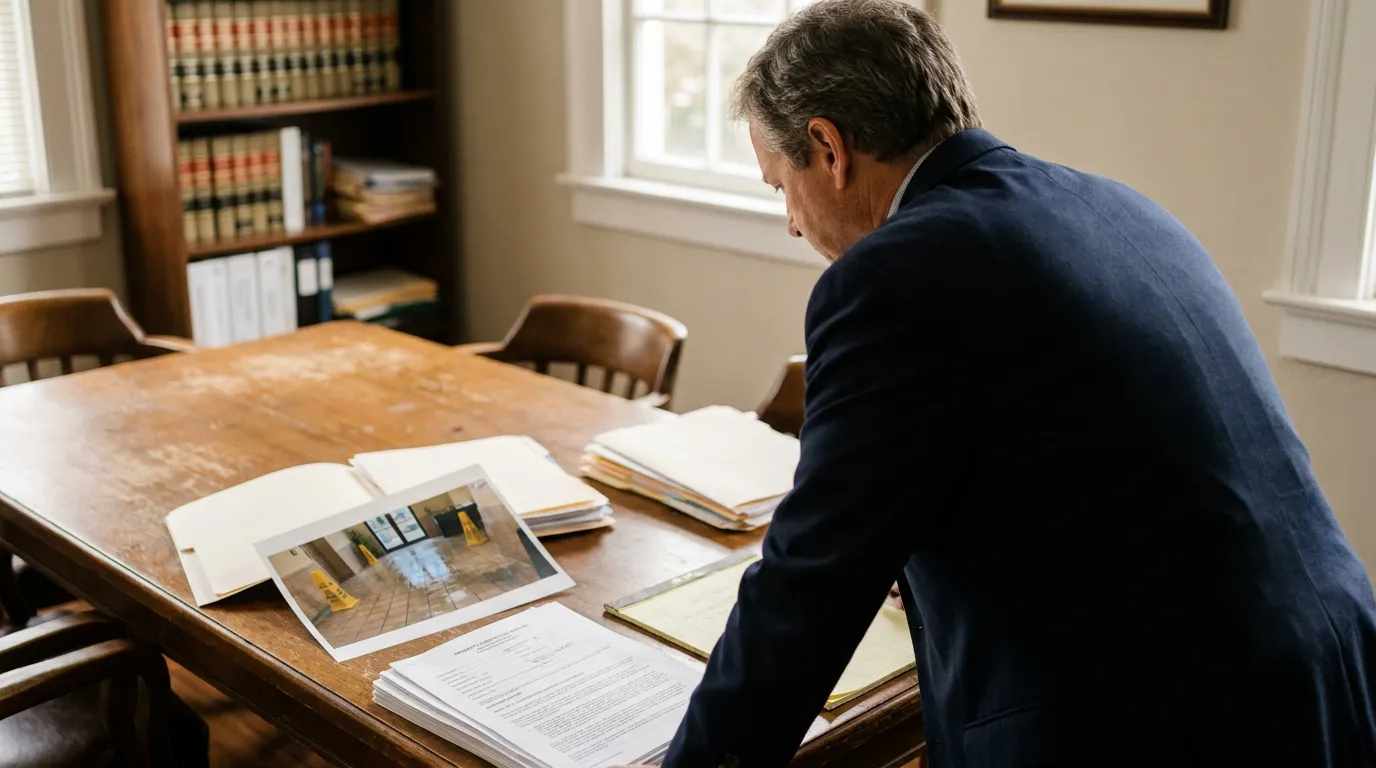
What Legal Foundation Supports a Premises Liability Claim in Louisiana?
Louisiana premises liability begins with the state’s general fault articles in the Civil Code. Articles 2315 and 2316 establish that any act causing damage obliges the person at fault to repair it, creating the broad legal basis for recovery when negligence causes injury.
For property owners specifically, the modern standard requires proof of knowledge. Under Louisiana Civil Code article 2317.1, an owner is answerable for damage caused by a ruin, vice, or defect only if the owner knew, or should have known through reasonable care, of the defect and could have prevented the harm. The Civil Justice Reform Act of 1996 replaced strict liability with this negligence-based standard, meaning property owners are no longer automatically liable simply because a defect existed.
💡 Pro Tip: If you fall on a property, note the date, time, and exact location of the hazard. Establishing how long a condition existed is often central to proving the owner should have known about it.
What Are the Elements of a Standard Premises Liability Case?
A plaintiff pursuing a premises claim in Louisiana must prove five elements by a preponderance of the evidence: (1) the defendant owed a duty of reasonable care, (2) the defendant breached that duty, (3) the risk and harm were within the scope of the duty, (4) the breach caused the injury, and (5) the plaintiff incurred actual damages. Missing any element defeats the entire claim.
These elements work together as a chain of proof. Duty establishes what the owner was legally required to do. Breach shows what the owner did wrong. Scope, causation, and damages connect that wrong to a compensable injury.
What Must Be Proven Against a Store or Business Under the Merchant Statute?
Slip-and-fall claims against merchants such as stores, restaurants, and hotels are governed by Louisiana’s Merchant Liability Statute, La. R.S. 9:2800.6. Under La. R.S. 9:2800.6(A), a merchant owes a duty to exercise reasonable care to keep aisles, passageways, and floors reasonably safe, including reasonable efforts to keep premises free of hazardous conditions. You can review the full text through the Louisiana State Legislature’s official record.
The statute places a three-part burden of proof on the injured plaintiff. Under La. R.S. 9:2800.6(B), the claimant must prove, in addition to all other elements:
- That the condition presented an unreasonable risk of harm and that risk was reasonably foreseeable, under La. R.S. 9:2800.6(B)(1)
- That the merchant either created or had actual or constructive notice of the condition before the occurrence, under La. R.S. 9:2800.6(B)(2)
- That the merchant failed to exercise reasonable care, under La. R.S. 9:2800.6(B)(3)
Failure to prove any one element will defeat the claim. The notice requirement is frequently the most difficult hurdle. This is why surveillance footage, incident reports, and maintenance logs are critical in a New Orleans premises liability claim.
💡 Pro Tip: Ask the store manager to complete an incident report before you leave, and request a copy. Prompt documentation helps preserve details that may otherwise disappear.
Why Is Constructive Notice So Important in a New Orleans Premises Liability Case?
Constructive notice is often the deciding factor in slip-and-fall cases against Louisiana businesses. Under La. R.S. 9:2800.6(C), constructive notice means the condition existed long enough that it would have been discovered if the merchant exercised reasonable care. A plaintiff must show the hazard was present long enough that a reasonably attentive business should have found and fixed it.
The statute also limits how a plaintiff can prove a lack of reasonable care. Under La. R.S. 9:2800.6(B)(3), the mere absence of a written or verbal cleanup or safety procedure is not, standing alone, enough to prove the merchant failed to exercise reasonable care. You can read a plain-language breakdown through this annotated version of the merchant liability law.
The merchant statute does not eliminate other legal theories. Under La. R.S. 9:2800.6(D), nothing in the statute affects liability a merchant may have under Civil Code articles 660, 667, 669, 2317, 2322, or 2695. These preserved avenues can matter when a case involves building defects or landlord-tenant issues.
💡 Pro Tip: Photograph the hazard from multiple angles immediately, including anything showing how long it may have been there, such as dried liquid, dirt, or footprints through a spill.
How Does the Duty of Care Differ for Hospitals and Non-Merchants?
Not every property owner is a merchant, and the standard can shift depending on the defendant. Louisiana’s appellate courts have generally held that hospitals owe a lesser duty than merchants and are not covered by the merchant statute, so general negligence principles apply instead.
The burden of proof for slip-and-fall cases against non-merchants remains unsettled in Louisiana. The legislature and Louisiana Supreme Court have not fully resolved the standard for defendants like hospitals and nursing homes, producing inconsistent results among appellate courts. Because these cases are legally complex, it is wise to consult a lawyer about how personal injury claims work in New Orleans before assuming which standard applies.
Working With a Premises Liability Attorney New Orleans LA Residents Trust
A knowledgeable premises liability attorney New Orleans LA families rely on can help gather the evidence these claims require. Louisiana follows a comparative fault system, allowing recovery even if partially at fault, though recovery is reduced proportionally. For causes of action arising on or after January 1, 2026, a party found more than fifty percent at fault may be barred from recovery.
Timing is critical, and Louisiana’s deadlines are strict. For injuries occurring on or after July 1, 2024, Louisiana applies a two-year statute of limitations for most personal injury claims; the former one-year deadline still governs injuries before that date. Courts interpret exceptions narrowly, and tolling arguments apply only in limited circumstances. Our New Orleans premises liability lawyer team encourages injured residents to act promptly.
The following table summarizes the core proof requirements discussed above.
| Type of Defendant | Governing Authority | Key Proof Requirement |
|---|---|---|
| Merchant (store, restaurant, hotel) | La. R.S. 9:2800.6 | Unreasonable risk, notice, failure to use reasonable care |
| General property owner | La. Civ. Code art. 2317.1 | Owner knew or should have known of the defect |
| Hospital / non-merchant | Case law, unsettled | Duty is generally less than a merchant’s |
💡 Pro Tip: Save all medical records and bills tied to your injury. Quantifying both economic losses and non-economic harm is essential to establishing damages.
Frequently Asked Questions
-
What is constructive notice in a Louisiana slip-and-fall case?
Constructive notice means a hazard existed long enough that a reasonably careful business should have discovered it. Under La. R.S. 9:2800.6(C), the injured claimant must prove the condition was present for sufficient time to be found through reasonable care.
-
How long do I have to file a premises liability claim in New Orleans?
For injuries on or after July 1, 2024, Louisiana applies a two-year prescriptive period; injuries before that date remain subject to the former one-year deadline. Courts read exceptions narrowly, so waiting can jeopardize your rights.
-
Can I recover if I was partly at fault for my fall?
Yes, in many cases. Louisiana’s comparative fault system allows recovery even when you share responsibility, though the award is reduced proportionally. For causes arising on or after January 1, 2026, being more than fifty percent at fault may bar recovery.
-
Is a business automatically liable if I fall on its property?
No. Under La. R.S. 9:2800.6(B), the injured person must prove an unreasonable risk, notice, and a failure to exercise reasonable care.
-
What evidence helps prove property owner negligence in New Orleans?
Photographs, surveillance video, incident reports, maintenance logs, witness statements, and medical records all help. This documentation establishes how long a hazard existed and connects the dangerous condition to your injuries.
Bringing the Pieces Together for Your Claim
Winning a New Orleans premises liability case requires proving duty, a dangerous and foreseeable condition, notice, and causation of real damages. For merchants, La. R.S. 9:2800.6 controls, while general property owners are judged under Civil Code article 2317.1. The notice element and prescription deadline are common obstacles. Because every situation turns on its facts, sound legal guidance can make a meaningful difference.
If a hazardous property condition injured you or someone you love in New Orleans, Metairie, Mandeville, or anywhere across Louisiana, Smiley Law Firm is ready to listen. Contact us today by calling (504) 822-2222 or by requesting your free consultation online.