How Federal Trucking Rules Shape a Louisiana Truck Accident Case
Key Takeaways: Federal FMCSA rules can significantly strengthen a New Orleans semi truck claim by providing uniform safety standards that prove a driver or carrier violated the law before a crash. Hours of Service limits under 49 CFR Part 395 create measurable duties, and electronic logging records confirm violations like exceeding the 11-hour driving cap or 14-hour window. Under Louisiana’s comparative fault system, an FMCSA violation can shift fault toward the trucking company. Louisiana’s direct action statute allows victims to pursue drivers, carriers, owners, loaders, and insurers directly in certain circumstances, though each negligent party pays only its own share of fault. Because strict deadlines apply and evidence like black box data vanishes quickly, preserving proof immediately is essential. Experienced legal representation is critical where federal regulations and Louisiana civil law intersect.
Yes, federal FMCSA rules can significantly strengthen a semi truck claim in New Orleans. These nationwide safety standards give injured victims a measurable benchmark to prove a trucking company or driver broke the law before a crash. When combined with Louisiana’s comparative fault system, an FMCSA violation can shift fault percentages and open multiple paths to recovery against well-resourced carriers.
If you or a loved one was hurt in a commercial truck collision, the team at Smiley Law Firm is ready to help. You can call us at (504) 822-2222 or schedule a free consultation online to discuss your rights. The sooner you reach out, the sooner critical evidence can be preserved.
What Are FMCSA Rules and Why Do They Matter in Louisiana?
FMCSA rules are federal safety regulations governing how commercial trucks operate on American roads. The Federal Motor Carrier Safety Administration writes and enforces these standards, which apply to nearly every 18-wheeler crossing Louisiana interstates. As federal law, they operate alongside Louisiana state statutes.
These rules create clear, testable duties that trucking companies must follow. All carriers and drivers operating commercial motor vehicles in interstate commerce must comply with Hours of Service regulations in 49 CFR Part 395. The same nationwide standard applies on I-10 through New Orleans as anywhere else, letting Louisiana plaintiffs invoke a uniform safety benchmark.
💡 Pro Tip: Federal and state law often overlap in trucking cases. A knowledgeable New Orleans truck accident attorney can identify every applicable rule so no avenue for accountability is overlooked.
How Do Hours of Service Limits Help Prove Fatigue?
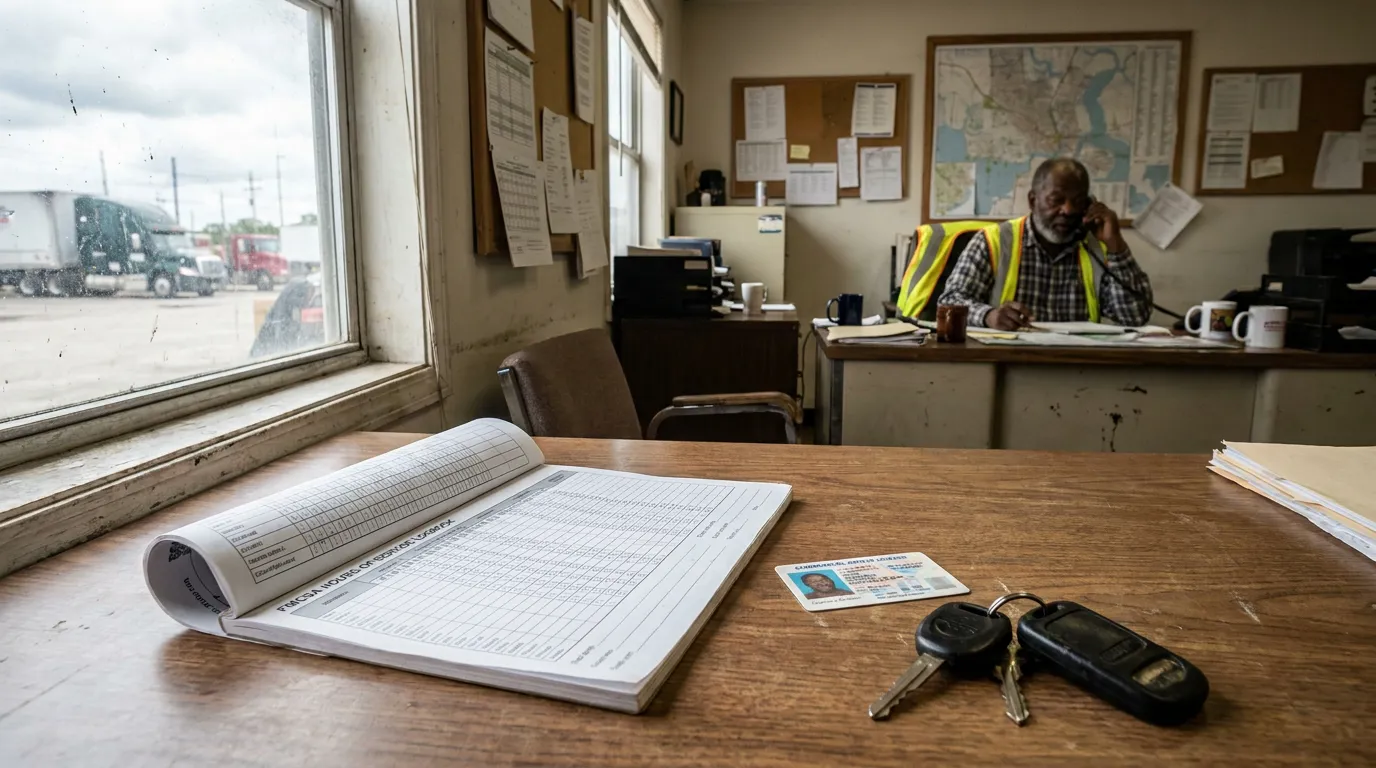
Hours of Service limits give injury attorneys a clear standard to test whether a fatigued trucker exceeded legal driving limits. Driver fatigue is one of the most common causes of catastrophic 18-wheeler crashes, and federal rules put hard caps on how long a trucker can stay behind the wheel. When drivers ignore these caps, the resulting crash may support a finding of negligence.
The core federal hours of service limits create benchmarks that electronic logging device records can confirm:
- 11-hour driving limit: A driver may drive a maximum of 11 hours after 10 consecutive hours off duty under 49 CFR §395.3(a)(3).
- 14-hour window: A driver may not drive beyond the 14th consecutive hour after coming on duty, and off-duty breaks do not extend that window.
- 30-minute break: Drivers must take a 30-minute break after 8 cumulative hours of driving time.
- Weekly caps: The 60/70-hour limits over 7/8 consecutive days may be reset only after 34 consecutive hours off duty.
A violation of the 14-hour window can serve as evidence of negligence in a semi truck claim. Weekly caps also help establish whether a carrier’s scheduling forced a driver to operate while over federal limits, supporting claims against the trucking company itself.
💡 Pro Tip: Driver log violations in Louisiana are easier to prove when black box data and electronic logs are secured quickly. Ask your attorney to send a preservation letter right away.
How Does Louisiana’s Comparative Fault System Interact With FMCSA Violations?
Louisiana’s comparative fault system, under La. Civ. Code Art. 2323(A), reduces a truck accident victim’s recovery by their own percentage of fault. For incidents occurring on or after January 1, 2026, Louisiana uses a modified comparative fault system, as amended by Acts 2025, No. 15. Under this system, if the victim is found to be 51% or more at fault, they are entirely barred from recovering any damages. For incidents occurring before January 1, 2026, the prior pure comparative fault system applies, under which recovery was reduced proportionally but never fully barred regardless of the plaintiff’s share of fault. Proving an FMCSA violation can shift fault percentages toward the trucking company and away from the injured party.
Louisiana originally replaced the contributory negligence bar with pure comparative fault via the 1979 amendments to Article 2323 (Act No. 431). The 1996 amendments to Articles 2323 and 2324 further refined the system by expanding fault allocation to non-parties and abolishing solidary liability among non-intentional tortfeasors. As of January 1, 2026, Louisiana has transitioned to a modified comparative fault system under Acts 2025, No. 15, barring recovery for plaintiffs found 51% or more at fault.
Fault can be assigned to every contributing party, even those not named in the lawsuit. Under Art. 2323(A), fault is assessed regardless of whether the person is a party or nonparty, and regardless of insolvency or immunity. This lets plaintiffs attribute fault to trucking companies or third parties who violated federal safety standards, which is central to how comparative fault under Louisiana law operates in commercial truck cases.
Who Can Be Held Responsible in a Semi Truck Accident Lawyer Louisiana Case?
A commercial truck crash in New Orleans often involves multiple liable parties. Trucking cases can implicate the driver, carrier, truck owner, maintenance company, and cargo loader. Under Louisiana law, joint tortfeasors in ordinary negligence cases are generally not solidarily liable, each is responsible only for its own share of fault.
Louisiana law limits how much any single negligent defendant must pay. Since the 1996 amendments to Article 2324, if liability is not solidary, each joint tortfeasor is liable only for his own degree of fault. Solidary liability is reserved mainly for intentional or willful acts, so in typical negligence-based trucking cases each defendant pays only its allocated percentage.
Louisiana’s direct action statute adds another powerful tool for injured victims in certain circumstances. Under La. R.S. 22:1269 (formerly La. R.S. 22:655), as significantly amended effective August 1, 2024, an injured person has no right of direct action against the insurer unless at least one of seven specific exceptions applies (such as insured bankruptcy, insolvency, failed service of process, or the insurer defending under a reservation of rights). When a direct action is permitted, the insurer cannot be named in the caption of the lawsuit, which must be captioned only against the insured defendant.
| Potentially Liable Party | Common Basis for Fault |
|---|---|
| Truck driver | Hours of Service or log violations |
| Trucking company | Negligent scheduling or hiring |
| Truck owner | Poor maintenance or unsafe equipment |
| Cargo loader | Overloaded or improperly secured freight |
| Insurer | Direct action liability under La. R.S. 22:1269 (where applicable exceptions are met) |
💡 Pro Tip: Because trucking cases involve multiple defendants, identifying every responsible party early can meaningfully affect the value of a truck accident claim in New Orleans.
How Do Courts View Safety Regulation Violations?
Louisiana courts often apply a duty/risk analysis when a safety statute has been violated. Under this framework, courts examine whether the statutory duty was intended to protect against the particular risk that caused the harm. This analysis can influence how FMCSA regulatory duties expand a trucking defendant’s scope of liability.
Louisiana case law shows how protective statutory purposes can support full recovery. In Boyer v. Johnson, 360 So. 2d 1164, a violation of child-labor safety provisions supported recovery because the statute was designed to protect against the plaintiff’s youth and inexperience. Courts interpret each statute’s purpose on its own facts.
If you are researching how to choose counsel, our guide on finding the right New Orleans truck accident attorney walks through what to look for. Experienced representation matters most when federal regulations and Louisiana civil law intersect.
Why Is Acting Quickly So Important?
Louisiana’s prescriptive period for personal injury is generally two years from the accident date for injuries occurring on or after July 1, 2024, while a one-year period applies to injuries before that date. Even the two-year window is shorter than in many states and especially urgent in trucking cases. Courts interpret exceptions narrowly, so tolling arguments should never be assumed.
Evidence in a truck crash can disappear within weeks. Black box data, driver logs, and dashcam footage can be overwritten or lost if no one demands their preservation. Working with a trusted semi truck accident lawyer Louisiana team early helps protect the proof needed to establish negligence.
💡 Pro Tip: Do not give a recorded statement to the trucking company’s insurer before consulting an attorney. What you say can affect how fault is later apportioned.
Frequently Asked Questions
-
Do FMCSA rules apply to every truck accident in New Orleans?
FMCSA regulations generally apply to commercial motor vehicles operating in interstate commerce under 49 CFR Part 395. Whether a specific rule applies depends on the truck, route, and operation type, so an attorney should review the facts. -
What happens if I was partly at fault for the crash?
Louisiana’s comparative fault system is governed by La. Civ. Code Art. 2323(A). For incidents occurring on or after January 1, 2026, Louisiana uses a modified comparative fault system under which you are barred from recovery if found 51% or more at fault; otherwise, your recovery is reduced in proportion to your percentage of fault. For incidents before January 1, 2026, the prior pure comparative fault system applies, allowing recovery regardless of your share of fault, reduced proportionally. -
Can I sue the trucking company’s insurance company directly?
It depends. Under La. R.S. 22:1269, as amended effective August 1, 2024, an injured person has no right of direct action against the insurer unless at least one of seven specific exceptions applies (such as insured bankruptcy, insolvency, or the insurer defending under a reservation of rights). When a direct action is permitted, the insurer cannot be named in the caption of the lawsuit. -
How long do I have to file a truck accident claim in Louisiana?
For accidents on or after July 1, 2024, the deadline is generally two years from the accident date, while earlier accidents remain subject to the one-year period. Because exceptions are narrow and evidence disappears quickly, speak with an 18-wheeler accident lawyer in Louisiana as soon as possible. -
How can a driver’s logs help my case?
Electronic logging device records can confirm or contradict compliance with Hours of Service limits. Driver log violations in Louisiana, such as exceeding the 11-hour driving cap or 14-hour window, can serve as evidence of negligence.
Bringing Federal Rules and Louisiana Law Together
Federal FMCSA regulations and Louisiana civil law work together to strengthen a New Orleans semi truck claim. Hours of Service limits create measurable duties, while Louisiana’s comparative fault and direct action statutes give victims multiple avenues to hold drivers, carriers, and insurers accountable. Because these cases involve overlapping laws, strict deadlines, and evidence that vanishes fast, outcomes depend on specific facts and prompt action.
If you were seriously injured in a commercial truck collision, reach out to our Louisiana personal injury attorneys at Smiley Law Firm today. Call (504) 822-2222 or visit smileyinjurylaw.com to schedule a free consultation. We proudly serve families across New Orleans, Metairie, Mandeville, the North Shore, and all of Louisiana.
This article is for general informational purposes only and does not constitute legal advice. Every case is different, so please consult an attorney about your specific situation.