
Underride Truck Accidents in New Orleans: What Happened and Who May Be Responsible
Key Takeaways: An underride truck accident happens when a passenger vehicle slides under the back or side of a large truck or trailer, so the trailer can hit the passenger compartment directly instead of the car’s crash-absorbing structures. These crashes often cause catastrophic or fatal injuries. In New Orleans, liable parties may include the truck driver, the motor carrier, the trailer owner, the maintenance company, the guard or trailer manufacturer, and in limited cases a freight broker or shipper. Liability depends on the facts, on federal rear guard rules such as 49 C.F.R. § 393.86, and on Louisiana negligence law. For accidents on or after January 1, 2026, Louisiana’s amended comparative fault rule generally bars recovery if the injured person is 51 percent or more at fault. Most injury claims arising from incidents on or after July 1, 2024, generally must be filed within two years, though wrongful death and other claims may follow different rules. Because trucking evidence can disappear quickly, families should act early and speak with an attorney.
An underride accident happens when a passenger vehicle slides underneath the back or side of a large truck or trailer. The trailer bed often sits at about the height of a car’s hood or windshield, so the strongest parts of the car, like the bumper, crumple zone, and engine block, may never engage the truck. In Louisiana, those who may be legally responsible include the truck driver, the motor carrier, the trailer owner, the maintenance company, and sometimes the company that made the guard or trailer.
If you or someone you love was hurt in one of these crashes, you do not have to work out the next steps alone. The team at Smiley Law Firm helps Louisiana families understand their rights after serious commercial truck collisions. Call us at (504) 822-2222 or schedule a free consultation with our team today.
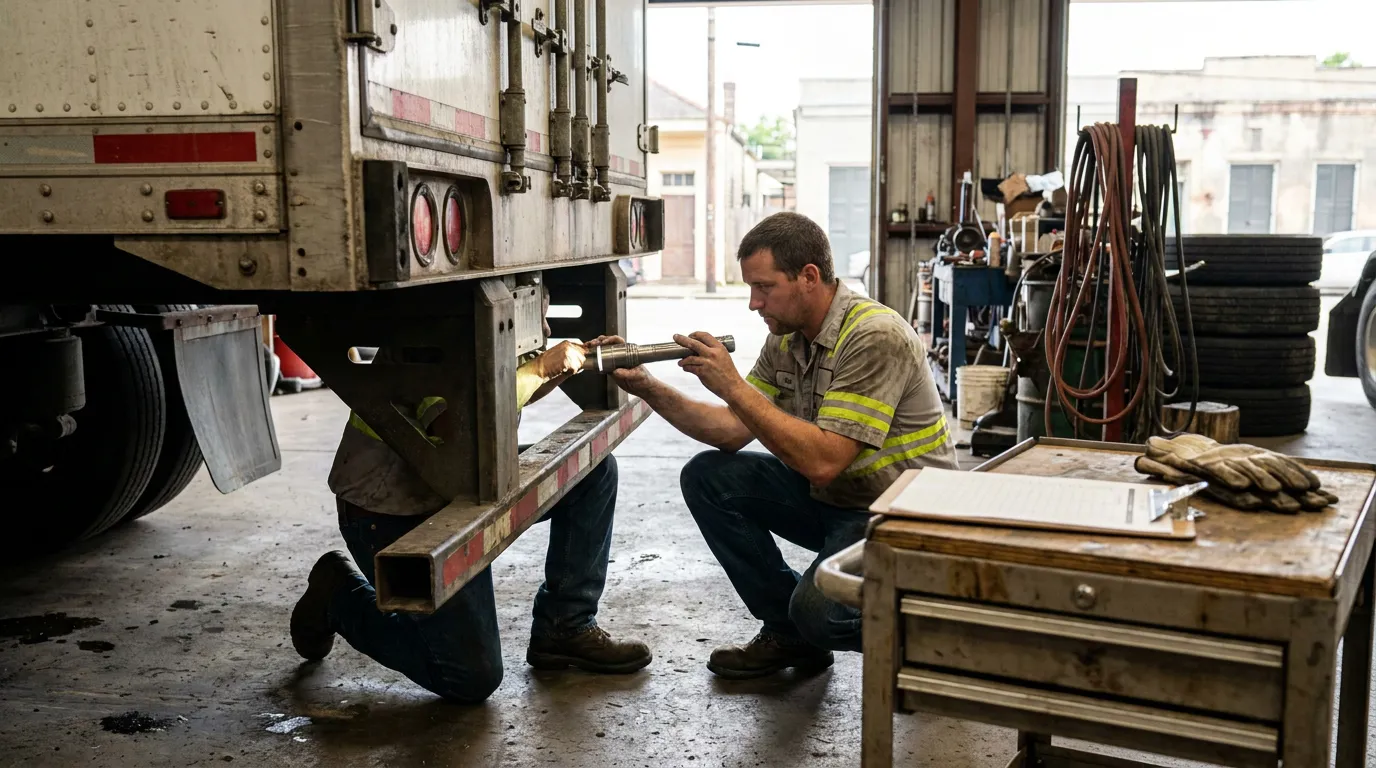
Why Are Underride Truck Accidents So Deadly?
Underride accidents are especially dangerous because they can bypass the safety features built into modern cars. Airbags and crumple zones are designed to let the car’s front structure absorb impact. When a car goes under a trailer, those systems may not work as intended, and the trailer’s rear edge can strike the windshield and roof at head height.
As a result, people in underride crashes often suffer catastrophic or fatal injuries. These can include traumatic brain injury, spinal cord damage, severe facial and skull fractures, and decapitation in the worst cases. Federal crash data from NHTSA’s Fatality Analysis Reporting System (FARS) have recorded underride deaths every year for decades. The U.S. Government Accountability Office and safety advocates have also noted that underride deaths are likely undercounted, because crash reports do not always identify underride as a factor.
Rear Underride vs. Side Underride
There are two main types of underride crashes, and the difference matters for liability. A rear underride happens when a car hits the back of a trailer, often in slow or stopped traffic on I-10 or I-610. A side underride happens when a car hits the side of a trailer, often while the truck is turning or crossing an intersection at night. Federal rules currently require rear guards on most trailers and semitrailers, with certain exceptions. Side guards are not federally required, so side underride claims usually rely on other theories of negligence or product liability.
What Federal Rules Govern Underride Guards?
Federal law generally requires many trailers and semitrailers, and certain trucks, to have rear impact guards meant to stop smaller vehicles from sliding underneath. The Federal Motor Carrier Safety Administration’s rear impact guard regulation, 49 C.F.R. § 393.86, sets requirements for guard height, width, and placement, with exceptions for certain vehicle types. Federal Motor Vehicle Safety Standards 223 and 224, at 49 C.F.R. §§ 571.223 and 571.224, cover how manufacturers must build and install guards.
Federal regulators have also been working to strengthen these protections. Safety advocates pushed for years before NHTSA moved forward with stronger underride guard standards. Much of that advocacy came from families who lost loved ones, including the founders of AnnaLeah & Mary for Truck Safety, whose two daughters died in a 2013 underride crash. The adequacy of underride guards is still debated and often becomes a central issue in litigation.
How Can a Guard Violation Show Negligence?
A missing, damaged, or noncompliant rear guard may be important evidence that a trucking company failed to meet its duty of care. Louisiana courts may consider violations of safety regulations when deciding whether a party acted negligently. A violation does not automatically establish liability, and the injured party generally must still show it was a cause of the harm.
Who Is Liable in an Underride Accident in New Orleans?
Several parties may share responsibility, and an underride accident often involves more than one. Louisiana’s general negligence rule, La. Civ. Code art. 2315, obligates a person whose fault causes damage to another to repair it. In trucking cases, that principle, along with laws such as the Louisiana Products Liability Act, may reach well beyond the driver.
| Potentially Liable Party | Possible Basis for Liability |
|---|---|
| Truck driver | Sudden stops, unlit trailer, illegal parking on the shoulder, fatigue, unsafe turns |
| Motor carrier | Employer liability for the driver, negligent hiring, poor inspection or maintenance practices |
| Trailer owner or lessor | Failure to repair or replace damaged guards |
| Maintenance company | Faulty repairs or missed inspection problems |
| Guard or trailer manufacturer | Defective design or weak welds (fact-specific) |
| Freight broker or shipper | Negligent selection of an unsafe carrier, in limited circumstances |
Broker and shipper liability is often disputed. Courts have reached different conclusions about broker responsibility, and federal preemption arguments are common. You can learn more about when a freight broker is liable in a New Orleans truck accident.
💡 Pro Tip: Ask for a copy of the police crash report as soon as it is available, and check whether the officer noted the trailer’s rear guard, lighting, or reflective tape. If the report leaves out these details, an independent investigation may be needed.
How Does Louisiana’s Fault System Affect Your Claim?
Louisiana’s comparative fault law changed recently, and the change may directly affect underride claims. For accidents before January 1, 2026, Louisiana generally applied pure comparative fault, so an injured person could recover damages reduced by their own percentage of fault. For accidents on or after January 1, 2026, amended La. Civ. Code art. 2323 generally bars recovery if the injured person is found 51 percent or more at fault. If the injured person’s share is 50 percent or less, damages are generally reduced in proportion to that fault.
Trucking insurers often argue that the car driver was following too closely or not paying attention. In a rear underride crash, the defense may put most of the blame on the passenger vehicle. Your claim may depend on evidence showing the truck was poorly lit, stopped illegally, or equipped with a defective or noncompliant guard.
What Evidence Should Be Preserved After a Louisiana Underride Crash?
Trucking evidence can disappear quickly, so acting early is one of the most important steps a family can take. Carriers may repair or scrap damaged trailers, and electronic data may be overwritten. Key evidence often includes:
- The trailer itself, including the rear guard, welds, and mounting brackets
- Engine control module ("black box") data showing speed and braking
- Electronic logging device records and hours-of-service logs
- Dashcam and forward-facing camera footage
- Inspection, maintenance, and repair records for the trailer
- Witness statements and nearby surveillance video
An attorney may send a preservation letter, often called a spoliation letter, formally demanding that the trucking company keep this evidence. If a party destroys evidence after receiving notice, Louisiana courts may allow remedies in some situations, such as an adverse presumption. A preservation letter works best when sent before the evidence is gone.
Engineering and Reconstruction Review
Underride cases often depend on technical analysis of the crash. Reconstructionists and engineers may measure guard height, test weld strength, and compare the trailer with the federal standards that applied based on its manufacture date.
How Long Do You Have to File an Underride Truck Accident Claim in Louisiana?
For most personal injury claims arising from incidents on or after July 1, 2024, Louisiana generally allows two years from the date of injury to file suit under La. Civ. Code art. 3493.1. Injuries before July 1, 2024, generally remain subject to the former one-year period under La. Civ. Code art. 3492. Wrongful death and survival actions under La. Civ. Code arts. 2315.1 and 2315.2 have their own timing rules; a wrongful death action, for example, generally runs from the date of death. Claims against a government entity can have different rules.
Exceptions that suspend or interrupt prescription exist, but courts generally interpret them narrowly. Because trucking evidence fades long before the filing deadline, waiting can hurt a claim even when time technically remains. Families in Metairie, Mandeville, Baton Rouge, and throughout the New Orleans metro should speak with an underride accident lawyer promptly to confirm which deadline applies.
💡 Pro Tip: Keep a simple daily journal of your symptoms, medical appointments, missed work, and how the injuries affect your family life. Records made at the time often carry more weight than later memories.
Frequently Asked Questions
1. Can I file a claim if the trailer had an underride guard?
Possibly. A claim may still exist if the guard was damaged, poorly maintained, mounted at the wrong height, or defectively designed or built.
2. Are side underride guards required in Louisiana?
Federal law does not currently require side underride guards on trailers, and Louisiana has no separate state requirement. Side underride claims may instead focus on driver conduct, such as unsafe turns, or on equipment problems such as poor lighting or missing reflective markings.
3. What if my loved one died in an underride crash?
Certain family members, in the order of priority set by Louisiana law, may be able to bring wrongful death and survival claims under La. Civ. Code arts. 2315.1 and 2315.2. These claims may cover funeral costs, loss of support, loss of companionship, and the victim’s suffering before death.
4. Will the trucking company’s insurer contact me?
In many cases, yes, sometimes soon after the crash. Adjusters may ask for recorded statements or offer an early settlement before the full extent of your injuries is known. Signing a release generally ends your ability to pursue the claim, so you may want to speak with an attorney first.
Protecting Your Family After an Underride Collision
Underride crashes are some of the most severe collisions on Louisiana roads, and the liability questions that follow are often complicated. Responsibility may fall on a driver, a carrier, a trailer owner, a maintenance provider, or others, depending on the facts. Preserving evidence early and getting answers specific to your situation can make a meaningful difference.
When you are ready to talk, we are here to listen. Reach out to our Louisiana personal injury attorneys at Smiley Law Firm by calling (504) 822-2222, or contact Smiley Law Firm today to schedule a free consultation with our team.
Disclaimer: This content is for informational purposes only and is not legal advice. Every case is unique, and results may vary. Consult an attorney about your specific circumstances.