
Hurt by Merchandise That Fell From a Shelf in a Louisiana Store? Here’s Your Next Move
Key Takeaways: After a falling merchandise injury in a New Orleans store, get medical care, report the incident to a manager before you leave, photograph the display and fallen product, note nearby cameras, and collect witness contact information. Louisiana’s merchant liability statute, La. R.S. 9:2800.6, generally places the burden on you to prove the condition posed an unreasonable risk of harm, that the store created it or had actual or constructive notice, and that it failed to exercise reasonable care, though courts have sometimes analyzed falling-merchandise claims under general negligence and custodial liability principles instead. Constructive notice is often the hardest element, making stocking logs, prior complaints, and surveillance footage critical evidence worth preserving early. Louisiana now uses a modified comparative fault rule for causes of action arising on or after January 1, 2026, under which a claimant found 51% or more at fault generally recovers nothing, while lesser fault reduces recovery proportionally, so it’s often wise to decline recorded statements until you speak with counsel. For injuries occurring on or after July 1, 2024, most Louisiana personal injury claims must generally be filed within two years of the accident (one year for earlier injuries), and store video is often overwritten long before then. The strongest cases tend to pair documented, serious injuries with clear proof of how the hazard formed, which is why an early case review matters.
If merchandise fell on you in a New Orleans store, get medical care, report the incident to a manager before leaving, photograph the display and fallen product, and collect witness names. A falling merchandise claim often rises or falls on evidence of how the hazard formed and whether the store knew about it. Under Louisiana’s merchant liability statute, the burden generally sits with you, and the clock moves fast: for accidents on or after July 1, 2024, most personal injury claims must generally be filed within two years of the accident date, while earlier accidents were subject to a one-year period.
If a heavy box, appliance, or stacked product fell on you at a store in Orleans, Jefferson, or St. Tammany Parish, the team at Smiley Law Firm is ready to review what happened. Call (504) 822-2222 or request your free case review to talk through your options with a Louisiana premises liability attorney.
What Should You Do in the First Hour After a Store Accident?
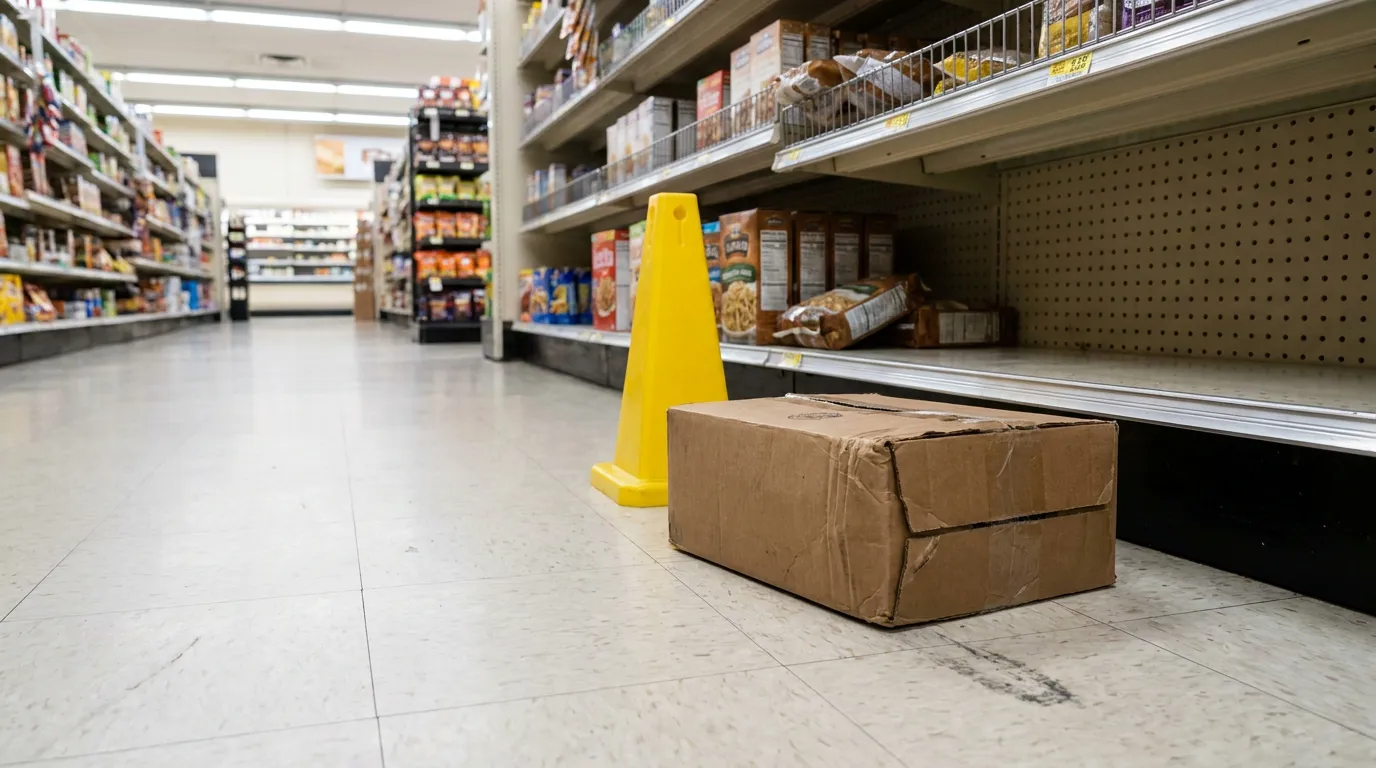
The first hour after a falling object injury can shape much of what follows. Retail evidence disappears fast, employees may restack the display or sweep the aisle. What you capture before leaving can become the strongest proof in the file.
- Accept medical attention. Head, neck, and shoulder injuries frequently feel minor for hours and then worsen.
- Ask for a written incident report. Request a copy or at least the report number and manager’s name.
- Photograph everything. Shoot the shelf, remaining stack, fallen item, aisle, signage, and your visible injuries.
- Note the cameras. Photograph ceiling domes near the aisle. Footage is often overwritten within days or weeks.
- Get witness contact information. Other shoppers rarely stay reachable unless you get a phone number on the spot.
- Keep the shoes and clothing you wore. They can corroborate impact points and rule out defense theories.
💡 Pro Tip: Write down what employees said right after the accident while it’s fresh. Statements like "that shelf has been loose all week" may support the notice element later, though admissibility depends on the evidence rules a court applies.
What Does Louisiana Law Require You to Prove?
Louisiana applies a specific statutory standard to many in-store injuries. As a civil law state, its premises rules come from codified text as interpreted by courts. The controlling provision for many store injuries is La. R.S. 9:2800.6, and it’s often stricter than shoppers expect.
Under subsection (A), merchants must exercise reasonable care to keep aisles and floors reasonably safe. Courts haven’t applied that duty uniformly to every falling-merchandise scenario: the heightened proof requirements in subsection (B) apply by their terms to damages "as a result of a fall," and some claims involving falling objects or defective shelving have instead been analyzed under general negligence or custodial liability rules such as La. C.C. arts. 2317.1 and 2322. Which framework governs depends on the facts.
Subsection (B) requires proof that the condition presented a reasonably foreseeable unreasonable risk of harm, that the merchant created it or had actual or constructive notice, and that the merchant failed to exercise reasonable care. Missing any element may defeat the claim regardless of injury severity. Even where the statute doesn’t apply, a claimant generally must still prove the merchant knew or should have known of the hazard. For more, see our guide on what must be proven in a premises case.
Why Is "Constructive Notice" the Hardest Part?
Constructive notice is where many retail injury claims succeed or collapse. La. R.S. 9:2800.6(C)(1) defines it as a condition existing long enough that reasonable care would have discovered it. You generally must show the unstable shelf sat that way long enough that an attentive store should have caught it.
Louisiana courts have held that an accident’s mere occurrence doesn’t establish notice; claimants must offer positive evidence of how long the condition existed. Notice generally isn’t required, however, when evidence shows the merchant created the hazard itself. This is why stocking logs, planogram records, prior complaints, employee schedules, and surveillance footage matter, and why an early preservation letter can make a meaningful difference.
How Do Courts Weigh Foreseeability Against Business Burden?
Louisiana courts may balance how foreseeable the harm was against the cost of preventing it. The Louisiana Supreme Court applied a duty/risk framework in Pinsonneault v. Merchants Farmers Bank, a case involving third-party criminal conduct often taught as an illustration of how courts decide whether a business owed a duty to guard against harm on its premises. Its holding addresses that context rather than merchandise displays.
Applied to merchandise, similar reasoning is intuitive: overhead inventory that can fall on a shopper presents a foreseeable risk, and the fix, proper strapping, weight limits, safe stacking, is often inexpensive. Courts may consider that imbalance, though every case turns on its own facts.
What Counts as "Unreasonable Risk of Harm"?
There’s no single formula for unreasonable risk of harm. Courts apply a fact-intensive risk-utility balancing test weighing the condition’s utility, the likelihood and magnitude of harm, prevention cost, and the plaintiff’s activity. A neat end-cap display differs from paint cans stacked eight feet high above a checkout lane.
Fact patterns that tend to draw scrutiny include: items stored above shoulder height without restraints, overloaded racks, merchandise pushed to shelf edges, and self-service displays customers must climb or reach into. Documenting which pattern applies can help counsel evaluate the claim.
Why Do Store Displays and Stockrooms Fail?
Falling objects are a commonly cited cause of injury in warehouse and retail storage environments. Safety organizations identify improperly stacked merchandise, unstable shelving, and overloaded racks as recurring causes, and recommend regular safety training and proper storage techniques.
Industry standards and a retailer’s internal policies aren’t themselves the legal standard of care, but courts may allow evidence of them as one factor bearing on reasonable care. A failure to train or enforce safe stacking may support an argument that the merchant created the condition rather than merely failed to notice it. Big-box retailers across Metairie, Kenner, and the North Shore run warehouse-style formats with inventory stored overhead in customer aisles.
| Common Failure | Why It Causes Injury | Evidence That May Help |
|---|---|---|
| Overloaded shelf or rack | Exceeds rated capacity and buckles | Rack rating labels, stocking records |
| Improper stacking height | Top-heavy load tips forward | Photos, store planograms |
| No restraints on overhead stock | Items slide with vibration or contact | Safety policies, training records |
| Untrained or rushed stockers | Shortcuts during restock | Employee schedules, prior complaints |
How Does Fault Sharing Affect a Claim?
Louisiana now follows a modified comparative fault system for causes of action arising on or after January 1, 2026, so partial fault reduces recovery and substantial fault can bar it. Under amended Civil Code article 2323, a claimant found 51% or more at fault is generally barred from recovery, while lesser fault reduces damages proportionally. Accidents before January 1, 2026, generally remain governed by the former pure comparative fault rule, under which any percentage of fault reduced but didn’t eliminate recovery. If a store argues you reached into a display or destabilized a stack, a fact-finder may assign you fault, significantly changing or eliminating the case’s value.
Insurers know this and often lead with fault-shifting theories in the first phone call. Declining a recorded statement until you’ve spoken with counsel is generally reasonable. A New Orleans store injury lawyer can handle those communications while you focus on treatment.
💡 Pro Tip: Follow your treatment plan without gaps. Missed appointments are a common argument insurers use to suggest an injury was minor or unrelated.
How Long Do You Have to File in Louisiana?
Louisiana’s prescriptive period for most personal injury claims is generally two years from the accident date for injuries on or after July 1, 2024, and one year for earlier injuries. This change came from Act 423 of 2024, enacting Civil Code article 3493.11, and applies prospectively only. Meeting the deadline means suit must be filed in a court of competent jurisdiction within the applicable period, not simply reported to the store or insurer. Waiting until the final months often means surveillance footage and stocking records are long gone.
Limited exceptions exist. Louisiana recognizes narrow doctrines that may suspend or interrupt prescription in certain situations, some claim types have different deadlines, and claims against public entities involve separate procedural requirements distinct from suits against private retailers. Courts interpret these exceptions narrowly, so no one should assume an extension applies without a lawyer reviewing the facts.
Which Falling Merchandise Cases Tend to Be Viable?
Cases involving significant, documented injury and clear evidence of how the hazard formed tend to hold up best. Traumatic brain injuries, skull and spinal fractures, crush injuries, and serious shoulder or knee damage from heavy falling inventory often require substantial treatment and generate the medical records that support damages claims.
Weaker files usually share traits: no incident report, no photographs, a several-week delay before the first medical visit, and no way to establish how long the hazard existed. Every premises matter deserves an honest evaluation, including telling a caller candidly when the notice element looks difficult to prove.
Frequently Asked Questions
1. Merchandise fell on me and the manager refused to write a report. What now?
Document everything yourself immediately. Email corporate customer service the same day describing the date, time, aisle, and injury, then keep the confirmation. Photographs, witness contacts, and a prompt medical visit may help substitute for a store-generated report. Louisiana law doesn’t generally require a retailer to prepare an incident report at a customer’s request.
2. Does the store’s insurer have to pay my medical bills right away?
Generally no. Louisiana law doesn’t require a retailer’s liability insurer to advance medical payments before liability is resolved, so many injured shoppers use health insurance, medical payments coverage, or provider arrangements in the interim. An attorney may help coordinate treatment options while the claim proceeds.
3. Can I still recover if I was reaching for an item on the shelf?
Possibly. Reaching for merchandise doesn’t automatically bar recovery, but any fault assigned to you reduces your award, and for accidents on or after January 1, 2026, fault of 51% or more generally bars recovery entirely. Outcomes depend heavily on the specific facts and on how the display was designed and stocked.
4. What evidence best proves the store had notice?
Surveillance footage, stocking and restocking logs, prior customer complaints about the same display, employee statements, safety inspection records, and internal shelving policies may all be relevant, though a court decides admissibility. These items are often in the merchant’s possession, which is why sending an early preservation demand matters.
5. How soon should I speak with a lawyer after a store accident?
As soon as you’re medically stable. Louisiana’s filing deadline and the short lifespan of store surveillance video both reward early action, and an early review costs you nothing but a conversation.
Protecting Your Claim Starts With What You Do Today
A falling merchandise injury in a New Orleans store is not a simple slip-and-fall. Depending on how a court characterizes the claim, it may require proof under La. R.S. 9:2800.6 that the condition posed an unreasonable risk, that the merchant created it or had actual or constructive notice, and that reasonable care wasn’t exercised, or proof under Louisiana’s general negligence and custodial liability articles. Photographs, a store accident report, witness names, prompt medical care, and a preservation request to the retailer are practical steps that give that legal analysis something to work with. Because Louisiana’s civil law framework, recent comparative fault changes, and filing deadlines leave little room for delay, an early case review is generally the safest path.
Louisiana families deserve straight answers about whether they may have a case. Reach out to the Louisiana personal injury attorneys at Smiley Law Firm by calling (504) 822-2222 or scheduling a free consultation to discuss what happened and what options may be available to you.
Disclaimer: This content is for informational purposes only and is not legal advice. Every case is unique, and results may vary. Consult an attorney about your specific circumstances.